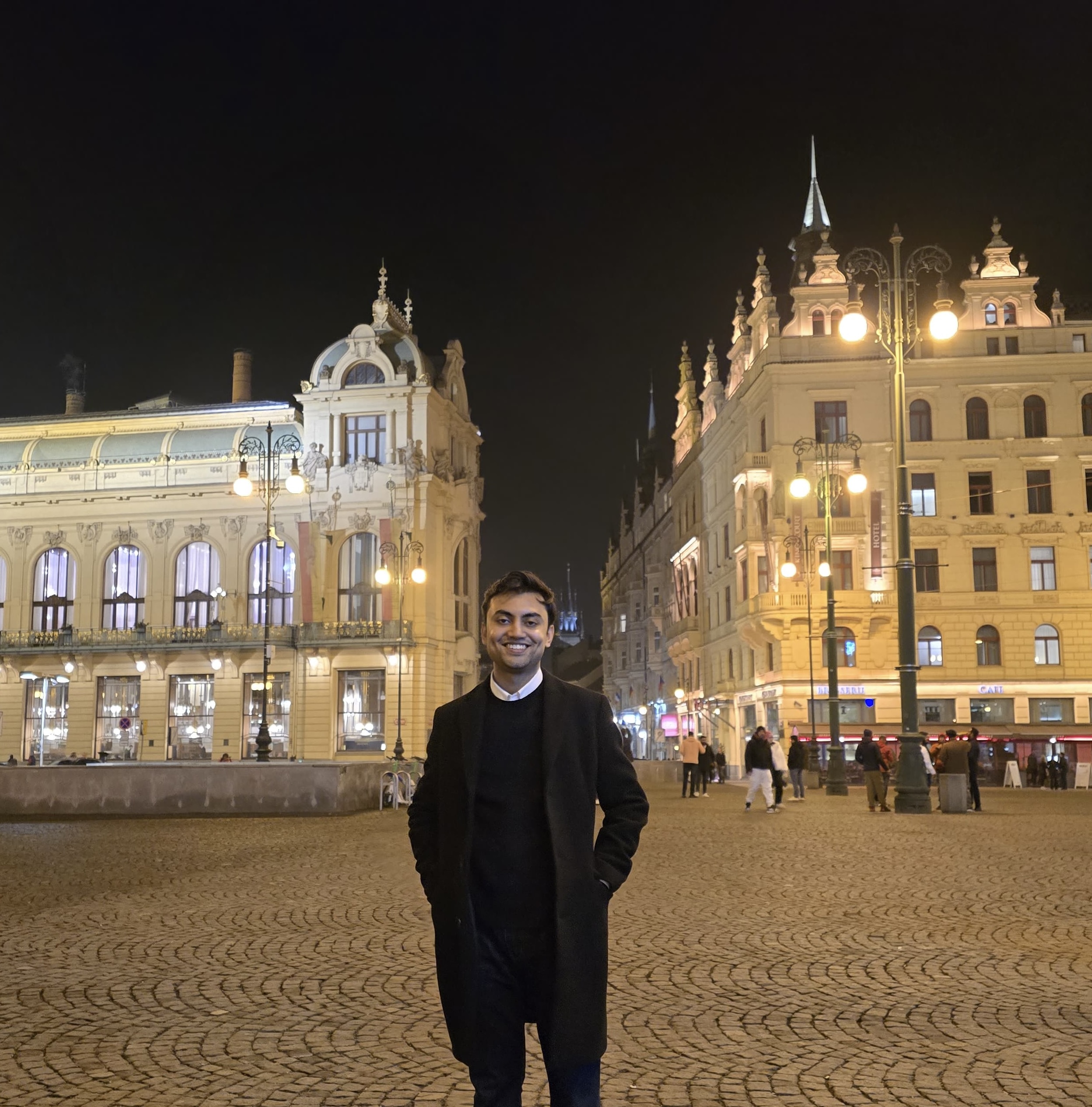
Wasif Shaqil
PhD student at the Astrophysics Research Institute, Liverpool John Moores University
Intro
I am a PhD student at the Astrophysics Research Institute, Liverpool John Moores University, working with Dr. Emma Beasor and Prof. Nathan Smith (Steward Observatory, Arizona).
My work focuses on the lives and deaths of massive stars throughout the "yellow void", a short-lived albeit critical phase before they explode as supernovae. I am particularly interested in understanding the mass-loss rates of yellow supergiants and how this mass loss affects their pre-supernova evolution and determines their resulting supernova types.
Massive stars may be rare, but they play an enormous role in shaping our universe. When they explode as supernovae, they release many of the heavy elements in the periodic table into space. In a sense, by studying massive stars, we are uncovering the story of how the elements around us--and even within us--came to exist.
I completed my Master’s degree in Physics (Astronomy & Astrophysics) at the University of Hamburg in April 2025.
My master’s thesis, "Tidal Interaction in the Galactic Center: The Case of X7", supervised by Dr. Diego Calderón and Prof. Dr. Stephan Rosswog,
focused on the dynamics of an enigmatic gaseous and dusty feature known as X7 near the supermassive black hole, Sagittarius A*.
This work resulted in a publication in Astronomy & Astrophysics,
in collaboration with researchers from Chile and the US, including 2020 Nobel Laureate Andrea Ghez.
Research
1. Tidal phenomena in the Galactic Center: The curious case of X7
Authors: Wasif Shaqil, Diego Calderón, Stephan Rosswog, Jorge Cuadra, Anna Ciurlo, Mark R. Morris, Randall D. Campbell, Andrea M. Ghez
Abstract:
Several enigmatic dusty sources have been detected in the central parsec of the Galactic Center. Among them is X7, located at only ~0.02 pc from the central supermassive black hole, Sagittarius A* (Sgr A*). Recent observations have shown that X7 is becoming elongated due to the tidal forces of Sgr A*. X7 is expected to be fully disrupted during its pericenter passage around 2035, which might impact the accretion rate of Sgr A*. However, its origin and nature are still unknown...
Get in touch
© Wasif Shaqil. All rights reserved. Design: HTML5 UP.